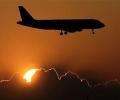
Jet fuel prices on Wednesday were cut by 1.3 per cent -- the first reduction after 10 rounds of price hikes -- on softening international crude oil rates. Simultaneously, prices of commercial LPG - used by business establishments such as hotels and restaurants - were reduced by Rs 135 per 19-kg cylinder. The price of aviation turbine fuel (ATF) -- the fuel that helps aeroplanes fly -- has been reduced by Rs 1,563.97 per kilolitre, or 1.27 per cent, to Rs 1,21,475.74 per kl (Rs 121 per litre) in the national capital, according to a price notification of state-owned fuel retailers.

State-owned oil firms on Friday hiked jet fuel prices by almost 2 per cent, the sixth straight increase in rates since October when international crude oil prices started climbing.

Maruti Suzuki India will increase the prices of its vehicles 'substantially' from next month as it looks to offset the impact of rising input costs and make provisions to update the model range to conform to stricter emission norms which kick in from April 2023. In a regulatory filing on Friday, the country's largest carmaker said it continues to witness increased cost pressure driven by overall inflation and recent regulatory requirements. While the automaker makes maximum effort to reduce cost and partially offset the increase, it has become imperative to pass on some of the impact through a price increase, it added.

The stormy second part of Budget Session continues.
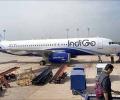
Market leader IndiGo on Friday followed its rivals and raised fares by 25 per cent to offset the impact of rupee fall and spike in international crude prices.
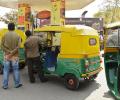
The government has slashed allocation of natural gas used for LPG production, and diverted the low-priced fuel to city gas retailers like Indraprastha Gas Ltd and Adani-Total Gas Ltd to meet a part of their requirement for CNG/piped cooking gas supplies, according an official order. The government had in October and November last year cut supplies of low-priced natural gas coming from old fields such as Mumbai High and Bassein fields in the Bay of Bengal, to city gas retailers by as much as 40 per cent in view of limited output.

Jet fuel (ATF) prices have been hiked by a steep 6.9 per cent, taking the rates to lifetime high of Rs 75,031 per kilolitre.


Aviation turbine fuel to now cost more.
Jet fuel prices on Saturday were hiked by a marginal 0.2 per cent -- the eighth straight increase this year -- to an all-time high, reflecting a surge in global energy prices. The price of aviation turbine fuel (ATF) -- the fuel that helps aeroplanes fly -- was hiked by Rs 277.5 per kilolitre, or 0.2 per cent, to Rs 113,202.33 per kl (Rs 113.2 per litre) in the national capital, according to a price notification of state-owned fuel retailers. Meanwhile, petrol and diesel prices remained unchanged for the 10th straight day after rising by a record Rs 10 per litre each.

Oil marketing companies (OMCs), paint manufacturers, tyre producers, and aviation stocks witnessed significant gains as Brent crude oil prices slipped below $70 per barrel. The price drop came after a double blow: The US imposed tariffs on Canada and Mexico, including energy imports, and OPEC+ - the group of major oil-producing nations including Russia - announced an output increase of 138,000 barrels per day, the first such hike since 2022.

Metal prices from copper to aluminum and tin have shot up by about 7-32 per cent in the past three months.
The three government oil marketing companies, Indian Oil Corporation, Bharat Petroleum and Hindustan Petroleum, are losing Rs 320 crore a day as they sell at subsidised rates.
Projecting a moderation in inflation despite the hike in petrol and diesel prices, the Economic Survey on Thursday cautioned against the pressures from rising foreign funds and global commodity price movement.

The government must be complimented for finally showing some determination in biting the bullet on petroleum prices. It must now stand its ground and ride the wave of political protests that are bound to be staged by an Opposition waiting to return to relevance.
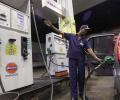
Petrol and diesel prices are likely to be hiked this week as oil companies prepare to pare losses accumulated from keeping rates steady for over four months in the run-up to assembly elections in five states, including UP, despite international oil prices jumping to a 13-year high of $140 per barrel. West Texas Intermediate crude futures, the US oil benchmark, rose to $130.50 per barrel on Sunday evening, its highest since July 2008, before retreating. The international benchmark, Brent crude, hit a high of $139.13 at one point overnight, also its highest since July 2008.

Auto major Mahindra & Mahindra said it has hiked prices of its utility vehicles by up to Rs 26,100.
Owing to another rise in jet fuel prices this month, airlines, such as Spice Jet, have decided to hike the fuel surcharge levied by them on tickets by Rs 150 for short haul sectors (less than 750 kms) and by Rs 350 for long haul sectors (more than 750 kms).The fuel surcharge for short haul routes now stands at Rs 1,950 while for long haul sectors it is Rs 2,350.
Honda Accord Hybrid and Accord Plug-in Hybrid are a perfect package of beauty, opulence, economic viability, and performance.
Indian Oil, Bharat Petroleum and Hindustan Petroleum raised avitation turbine fuel price by Rs 3,949 to Rs 36,252 per kilolitre in Delhi effective Monday midnight, an IOC official said. International crude oil prices have firmed to a seven-month high of $72 per barrel on hopes of demand revival in US.

Cement manufacturers have hiked prices after a challenging Q1FY25, and Q2FY25 (so far) when general elections and seasonal factors cut down on construction activity. The August prices are currently around 3-6 per cent above July 2024 but may not be sustainable in the face of weak demand. H2FY25 may see realisation growth which, if it happens, would drive average operating profit/tonne improvements in H2FY25 over a muted H1FY25.
Costlier petrol, diesel and LPG pushed up inflation to 7.76 per cent during the week ended November 6 amid fears that it could rise further in the coming weeks after the full effect of the second round of price hike in petro products during the perio
Rising crude oil prices are alarming, says PM. He considers all possible options to deal with it.
Aramco Trading Co, a subsidiary of state oil giant Saudi Aramco, offered 2.8 million barrels of ultra low sulphur diesel for loading in late July to early August

Pilot's statement came amid reports of his discontentment with the Congress leadership.

This increase excludes local levies. The actual hike after considering VAT would be Rs 2.84 per litre in Delhi for petrol and Rs 2.11 for diesel.
The government is unlikely to raise petrol and diesel prices before the end of the current monsoon session of Parliament and may moderate the hike with a dose of excise duty cut, a top official said on Wednesday.
Petrol and diesel prices will not be hiked immediately as the Cabinet on Friday did not discuss the issue, Defence Minister Pranab Mukherjee said.

Acknowledging that the Union government had its own pressures in increasing petrol and diesel prices, Tamil Nadu Chief Minister M Karunanidhi, whose party DMK is a key UPA ally, said on Wednesday that it would persuade the Centre to roll back the prices.
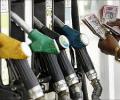
India has asked bulk buyers to pay market rates for diesel since last January and has also been raising the price of subsidised diesel in small amounts every month in an effort to cut its ballooning fuel subsidies.
CPI leader Gurudas Dasgupta asked the government on Monday to reduce the tax burden on petroleum products and clubbed their consumption in the country.
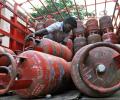
LPG rates were last hiked on November 1 by Rs 2.05 per cylinder. Prior to that rate was hiked on October 28 by Rs 1.5 per cylinder on account of hike in commission paid to dealers.
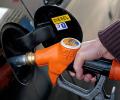
The price of diesel sold to bulk users has been hiked by about Rs 25 per litre in line with a near 40 per cent rise in international oil prices, but retail rates at petrol pumps remain unchanged, sources said. Petrol pump sales have jumped by a fifth this month after bulk users like bus fleet operators and malls queued up at petrol bunks to buy fuel rather than the usual practice of ordering directly from oil companies, widening the losses of retailers. Worst hit are private retailers like Nayara Energy, Jio-bp and Shell, who have so far refused to curtail any volume despite a surge in sales.
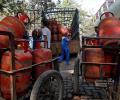
The government is likely to give a subsidy of Rs 30,000-35,000 crore to state-run oil companies - Indian Oil Corporation (IOC), Bharat Petroleum (BPCL), and Hindustan Petroleum (HPCL) - to compensate for losses incurred from selling LPG at below cost over the past 15 months, according to a senior official.
Government will review fuel pricing scenario in October, Petroleum Secretary M S Srinivasan said on Thursday. The petroleum secretary further said, "Situation will be revisited in October when we will take stock of the scenario emerging out of international oil prices." Global crude prices touched a record $145 a barrel, which is expected to push India's oil import bill this year higher by nearly 76 per cent to $110-120 billion.
Ahead of her party MPs' meeting with Prime Minister Manmohan Singh in Delhi on Tuesday over fuel price hike, Trinamool Congress chief Mamata Banerjee on Monday said her party would not compromise on the price rise issue.
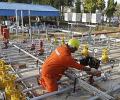
The 62 per cent increase in natural gas prices by the Indian government will boost the profitability of upstream companies in the country and support their investment spending, Fitch Ratings said on Tuesday. The price for gas from fields that were assigned by the state to oil companies, mainly Oil and Natural Gas Corporation (ONGC) and Oil India Ltd (OIL), increased to $2.90 per million British thermal units (mmBtu) for October 2021-March 2022, from $1.79 per mmBtu in the previous six months. "Higher gas prices will increase the input cost for key end-consumer sectors, to the extent the price hike is passed on," Fitch said.
